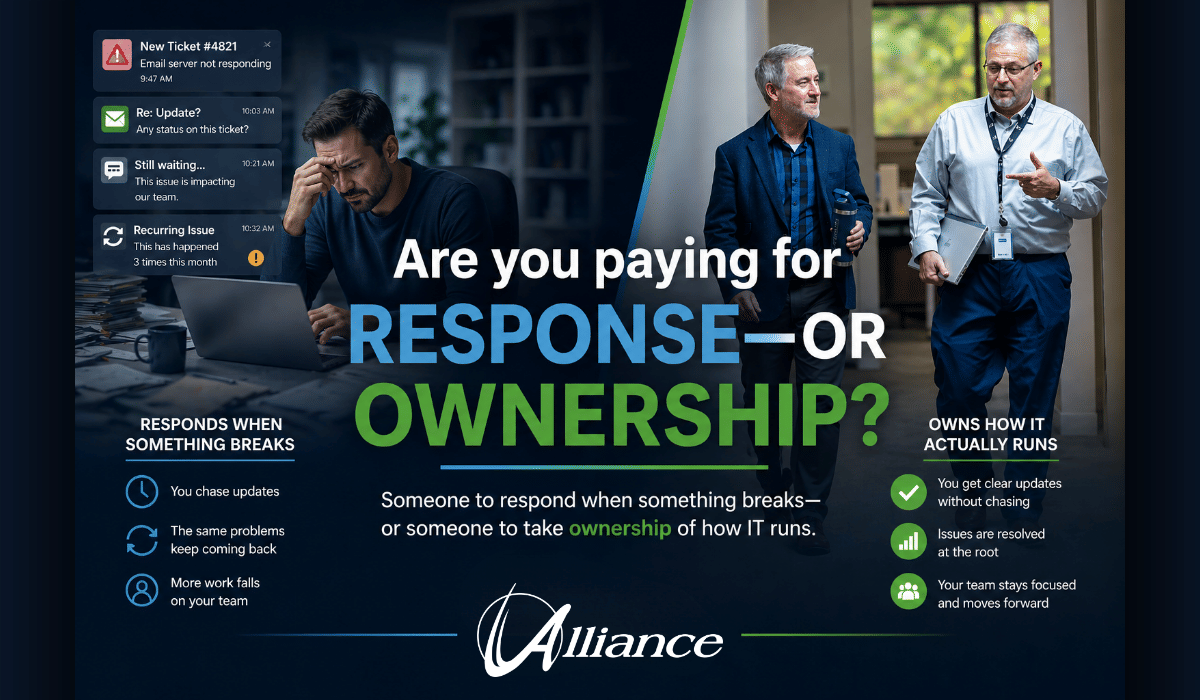

- Many IT vendors promise support—but the right partner helps your business grow, stay secure, and avoid costly surprises.
- Clarity is everything: Knowing what’s slowing you down (and why) makes it easier to find the right fit.
- Great IT partners don’t just fix what’s broken—they anticipate, advise, and scale with you.
Choosing the right IT partner shouldn’t feel like guesswork. This guide breaks down what to look for—so you can avoid missteps, ask smarter questions, and move forward with confidence.
1. Start With What Your Business Really Needs
Before comparing vendors, get brutally clear on your gaps. What’s breaking, what’s slowing you down, and what’s at risk if nothing changes?
- Where are the bottlenecks? Downtime, security gaps, lagging systems?
- Who’s impacted? Frontline teams, leadership, customers?
- What does a win look like? Faster growth, more uptime, less firefighting?
Technology should support your momentum—not stall it. Clarity here lays the foundation for the right partnership.
2. How to Evaluate Managed IT Providers
Don’t just ask what services they offer—ask how they operate when things go wrong, and when they go right.
| What to Ask About | Why It Matters |
|---|---|
| Proactive support | Do they prevent issues or just react to them? |
| Industry experience | Do they understand your operational environment? |
| SLAs | Are response times and responsibilities clearly defined? |
| Visibility and communication | Will you know what’s going on—or always be guessing? |
| Team enablement | Will they make your IT team stronger—or try to replace them? |
The best IT partners reduce noise, increase resilience, and keep you informed.
3. Cybersecurity Shouldn’t Be an Afterthought
If your cybersecurity plan is just tacked on to check a box, you’re exposed.
Strong cybersecurity includes:
- 24/7 Monitoring: Stop threats before they become breaches.
- Backup & Recovery: Downtime should be minutes, not days.
- Email & Endpoint Security: One wrong click shouldn’t bring you down.
- Compliance Reporting: Prove you’re secure when regulators ask.
Cyber threats don’t discriminate by company size. An IT partner should make security foundational, not optional.
4. IT Strategy and Consulting
If your IT roadmap is “fix it when it breaks,” you’re leaving value on the table.
A strategic IT partner:
- Aligns tech with business goals.
- Plans for growth so systems scale with you.
- Surfaces risks and opportunities you might not see internally.
- Keeps leadership informed with plain-language insights.
This is how IT becomes a driver of competitive advantage.
5. FAQs: What Other Leaders Are Asking
How do I know if it’s time to outsource, co-manage, or just get support?
If your internal team is reactive, projects are falling behind, or security concerns are mounting, it’s time to explore external help. We can help you figure out which type of support will work best for your company.
What’s the most impactful thing I can do with a limited IT budget?
Regardless of the budget, well-managed IT isn’t optional—it’s part of the cost of doing business today. If you rely on technology to serve clients or run operations, you also need the right expertise to protect it. That means systems set up correctly, patched regularly, protected by security software, and backed by clear policies. Cutting corners here doesn’t just risk downtime—it risks your reputation, your data, and your people.
How much should we budget for IT and security?
A good rule of thumb: 4–8% of gross revenue for total IT spend. For small businesses, that often means $30K–$150K annually depending on your industry and regulatory requirements.
What about AI? Is AI helping or hurting cybersecurity?
In the short term, attackers are using AI to create more convincing scams. Long term, AI will likely help automate defenses. For now, use it as a support tool—not a silver bullet.
Can I keep my internal IT team?
Absolutely. A good partner strengthens your team—they don’t replace them.
Final Thoughts: Don’t Settle for an IT Partner Who Just Keeps the Lights On
Technology shouldn’t be something you constantly worry about. It should be handled by people you trust, with a plan that supports your goals and protects what matters most.
Because you don’t need another vendor—you need a partner who’s invested in your success.
Ready to go from reactive to strategic? Download the playbook and learn how to turn IT chaos into a competitive advantage.