

You may already know your current IT setup isn’t ideal.
Maybe documentation is thin.
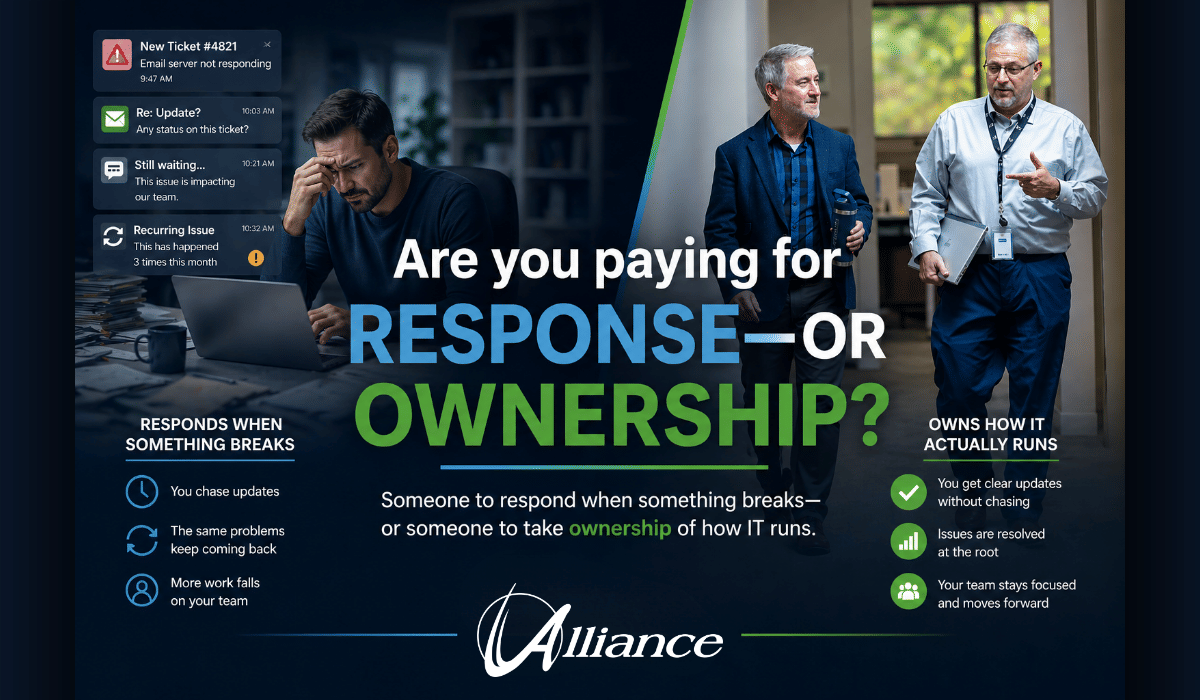
Support feels reactive.
Accountability is unclear.
But the last thing you want is a mess. And switching providers can feel like opening a can of worms.
What if credentials are missing?
What if systems break during the transition?
What if the new provider makes it worse?
Those concerns are valid when transitions are unstructured.
A well-run IT transition does not rely on luck. It follows a defined operational framework.
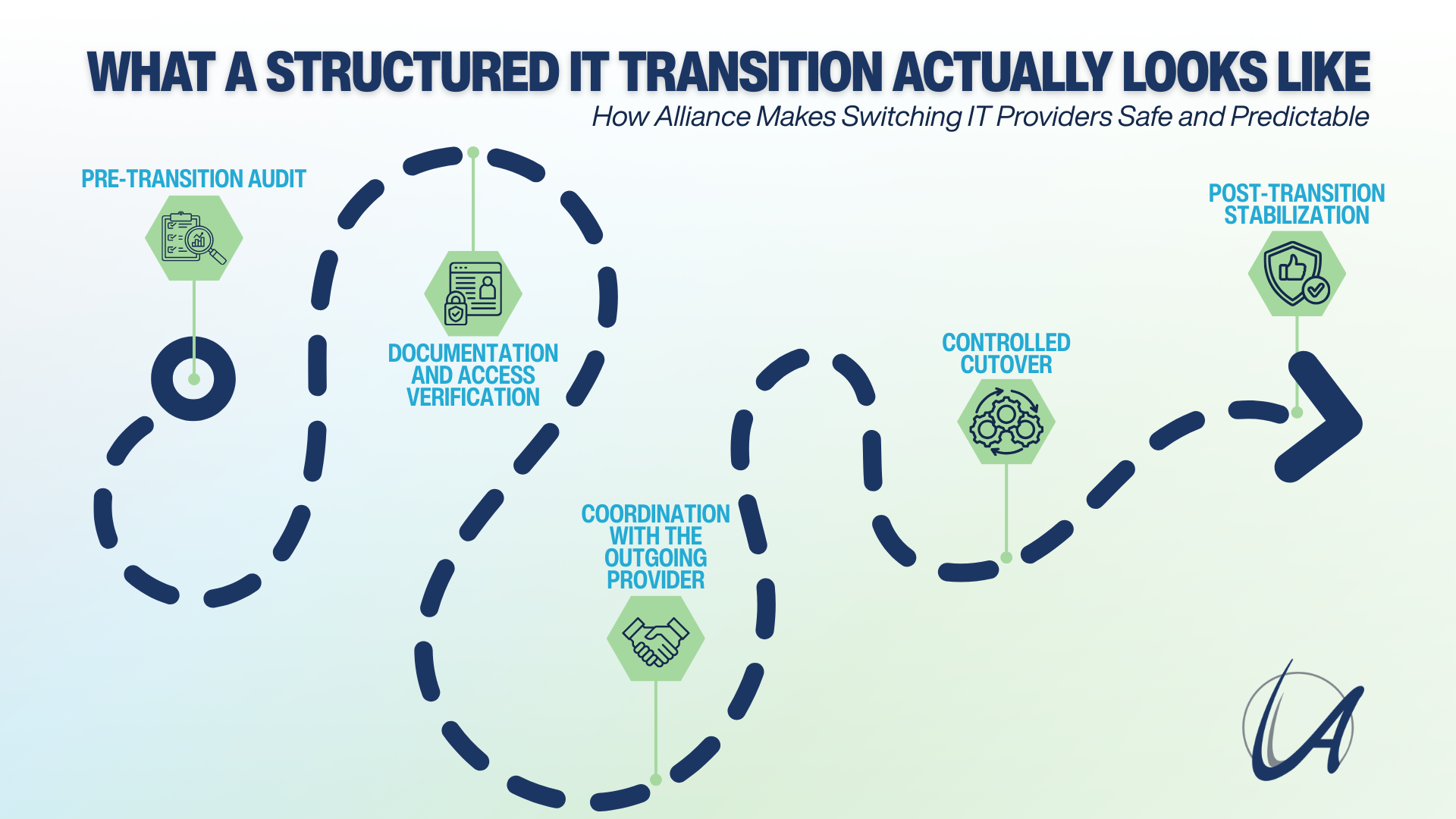
Switching IT Is a Multi-Phase Operational Process
Changing IT providers is not a single event. It is a multi-phase process.
Here is what that looks like in practice.
Phase 1: Pre-Transition Audit
This includes:
- Complete asset inventory (servers, workstations, firewalls, licenses, cloud systems)
- Network mapping
- Review of backup systems
- Security configuration overview
- Identification of third-party vendors connected to your infrastructure
At this stage, no tools are replaced. No changes are pushed live.If documentation is incomplete or inconsistent, it becomes visible here, before timelines are finalized.
The objective is clarity about what exists and how it is connected.
Phase 2: Documentation and Access Verification
This phase reconciles documentation with reality.
It includes:
- Validation of administrative credentials
- Confirmation of domain and cloud ownership
- Review of password management structure
- Verification of multi-factor authentication
- Confirmation of licensing control
- Identification of shared accounts that require cleanup
Transitions stall when access is unclear or ownership is ambiguous. A structured provider resolves those gaps before moving forward. At Alliance Technologies, nothing advances until credentials and control are confirmed.
Phase 3: Coordination With the Outgoing Provider
Professional transitions require formal coordination.
This phase includes:
- Structured documentation transfer requests
- Agreed-upon exit timeline
- Scheduled knowledge transfer sessions when appropriate
- Defined communication channels
This is where many transitions break down—when no one clearly owns the coordination. That’s why every Alliance engagement includes a 30-day transition window. This protects you from rushed handoffs, poor documentation, and post-contract surprises.
That is why the quarterback model matters.
The Quarterback: One Accountable Transition Lead
Every structured transition requires one accountable lead overseeing the entire process.
That means one person is responsible for:
- Timeline management
- Documentation intake and review
- Vendor coordination
- Risk identification
- Status reporting
- Cutover readiness confirmation
When ownership is divided, tasks slip. When tasks slip, timelines compress. When timelines compress, interruptions increase.
The quarterback prevents that chain reaction.
You shouldn’t be chasing passwords or mediating technical exchanges between providers. That is operational work—and it should be owned. Working with Alliance ensures you’re not running around as the go-between when your time is better spent focused on your business.
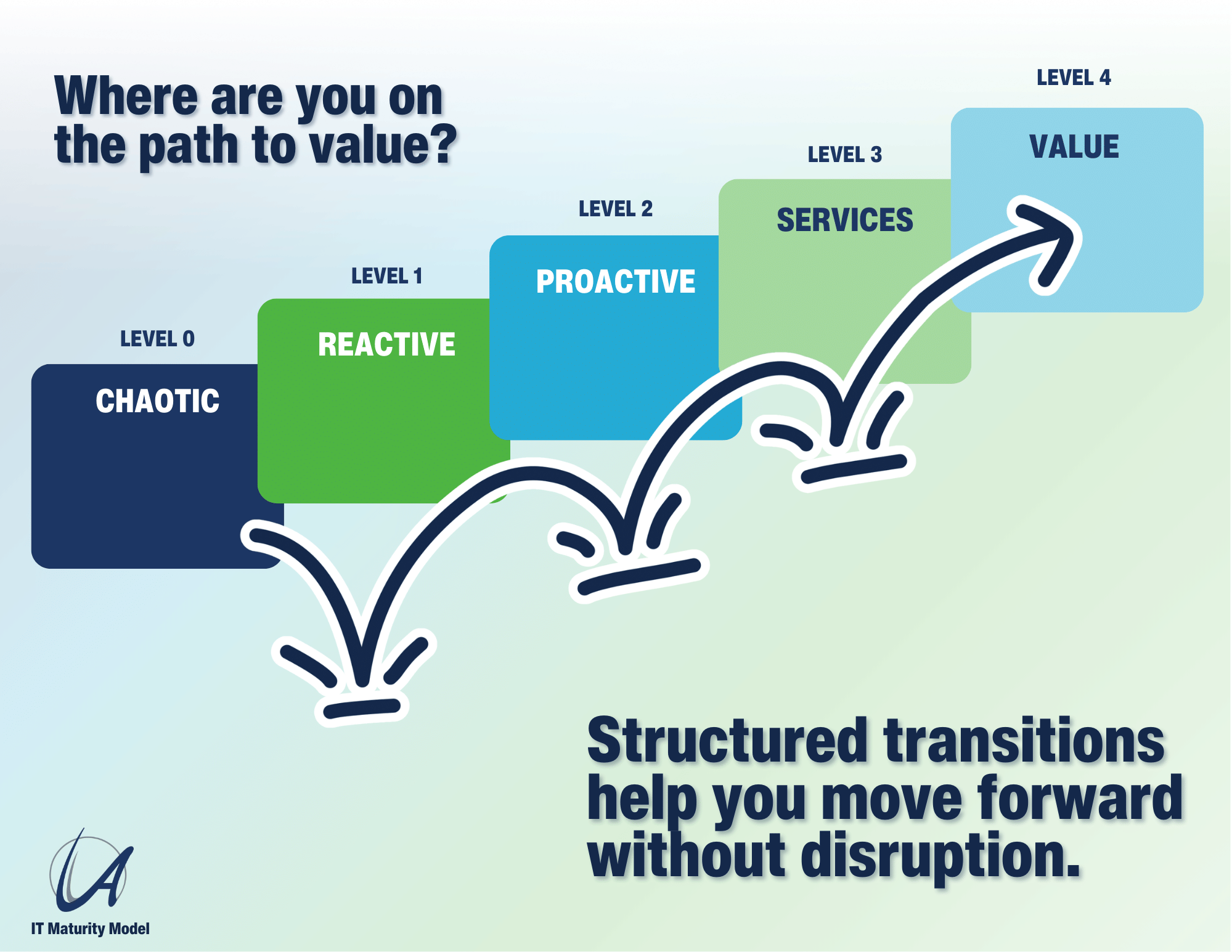
Transitions don’t just fix what’s broken. They’re your opportunity to raise the bar. With structure, accountability, and the right process, you're not just switching providers—you’re upgrading how IT supports the business. Moves like that are what take you from reactive support to strategic impact.
Phase 4: Controlled Cutover
Cutover is scheduled only after the groundwork is complete.
It may include:
- Endpoint management transfer
- Monitoring platform migration
- Firewall configuration updates
- Backup platform transition
- Help desk redirection
- Identity or email configuration updates
Cutover happens after:
- Documentation is reconciled
- Administrative control is confirmed
- Backups are validated
- Security controls are reviewed
When sequencing is defined, interruptions are minimized.
But when timelines are rushed and milestones aren’t met, things can unravel quickly.If both providers aren’t aligned with clear responsibilities and shared deadlines, the risk isn’t just friction. It’s service interruption, access loss, or even data destruction. Alliance works to minimize this for you.
Phase 5: Post-Transition Stabilization
Transition does not end at cutover.
A stabilization period follows to confirm consistency under the new structure.
This phase includes:
- Monitoring validation
- Alerting system confirmation
- Backup verificationUser access review
- Residual documentation cleanup
- Security posture review
This ensures the environment is not just transferred—it is normalized. We don’t “flip the switch and disappear.” At Alliance, stabilization is a formal phase with monitoring, cleanup, and follow-through built in.
Exit Readiness Reflects Operational Discipline
A well-managed IT environment should be transferable without operational disruption.
That means:
- Documentation is current and centralized
- Assets are inventoried
- Administrative ownership is clearly defined
- Credential control is documented
- Security controls are known and verifiable
If an environment cannot be cleanly transferred without dependency on undocumented knowledge, documentation and ownership controls are not where they should be.
Transferability is not about planning to leave. It is about maintaining operational standards that prevent reliance on memory or informal knowledge.
When we manage an environment, we maintain it in a state that could be handed off if necessary. That expectation enforces discipline in documentation and ownership.
How Alliance Takes the Work (and Risk) Off Your Plate
You may dread the idea of switching IT providers because it seems chaotic—the uncertainty, the dropped balls, the back-and-forth between vendors.
But you shouldn’t have to chase vendors, documents, or access. And you shouldn’t have to put your business on the back burner to make the transition happen.
That’s why we built our transition model differently.
We handle the process end to end, with a single accountable lead, clearly defined phases, and documented control at every step. With Alliance leading and our standard 30-day transition window in place, you get the breathing room to exit cleanly, avoid disruption, and stay focused on running your business.
You’re not hiring us to simply manage tickets. You’re trusting us to protect operations during a sensitive shift. That’s why we don’t just execute the transition. We own it.
From day one, our role is to take the weight off your plate and make the handoff feel like a non-event.
If You’re Evaluating a Change
If switching feels like more hassle than it’s worth, don’t debate the risk.
Review the structure.
A defined transition plan removes uncertainty. It clarifies ownership. It outlines sequencing. It sets expectations.
You deserve to see that framework before making a decision.
Ready to See What a Structured Transition Looks Like?
Book a meeting to review the transition blueprint
Contact Us
Prefer to evaluate internally first?
Download our executive playbook that outlines the operational standards that make IT environments stable, secure, and ready for whatever’s next.
Click here to download